Aragonite – the mineral of inner structure and deep rebalancing
Written by: Echipa Druzy
|
|
Time to read 12 min
What is aragonite and what is it used for?
Aragonite is a mineral from the carbonate class, known for its properties associated with balancing energy bodies, supporting confidence, and renewing inner strength. In crystal therapy, aragonite is used as support for stability and clarity, acting as a catalyst for conscious processes, not as a substitute for personal work.
Aragonite is a mineral of balance built over time. It does not impress through brilliance or intense color, but through its natural, orderly, and repetitive structure, which reflects the way nature creates stability from slow and precise processes. Formed in caves, mineral springs, or marine environments, aragonite preserves in its geometry the story of water, pressure, and time that deposits layer upon layer.
In crystal therapy, aragonite is associated with balancing energy bodies, strengthening confidence, and renewing inner power, especially during periods when the external pace becomes overwhelming. It is not seen as a stone of sudden transformations, but as a subtle support for conscious processes, mental clarity, and returning to a stable inner center. Through its calm presence and its formation process, aragonite reminds us that true strength is not activated through haste but is built over time, with patience and commitment.
Photo credit: Druzy
This article offers a comprehensive overview of aragonite, a mineral from the carbonate class, known for its orderly structure and its role in inner balance.
1. What is aragonite – origin and mineralogical structure
Aragonite is a mineral from the carbonate class, with the chemical formula CaCO₃, chemically identical to that of calcite. The fundamental difference between the two does not lie in the elements that compose them, but in the way they are organized at the atomic level. Aragonite crystallizes in the orthorhombic system, a less thermodynamically stable structure, but one that allows the development of much more complex, precise, and geometrically ordered natural forms.
This orthorhombic structure makes aragonite a relatively fragile mineral, sensitive to temperature and pressure variations, but at the same time extremely expressive morphologically. Its crystals can organize into radial, stellar, prismatic, or botryoidal aggregates, each typology reflecting the specific conditions of formation. For this reason, aragonite is often considered a clear example of how the environment directly influences the shape and character of a mineral.
Aragonite forms especially in calcium-rich environments, where mineral solutions are subjected to particular conditions of temperature, pressure, and saturation. It is commonly found in caves and karst systems, appearing as stalactites, stalagmites, or delicate formations deposited from water seeping through rock. It also develops in thermal springs, where high temperatures and water chemistry favor its rapid crystallization.
Another important formation environment is marine sediments. In oceans and seas, aragonite plays an essential role in the biological structure of numerous organisms, being the main constituent of corals, shells, and other marine life forms. In these cases, aragonite is produced through controlled biological processes, becoming an integral part of skeletons and shells, which directly ties it to the idea of support, protection, and structure.
This variety of formation environments makes aragonite a profoundly adaptable mineral, capable of appearing in both geological and biological contexts. However, this adaptability comes with a temporary character. Under normal geological stability conditions, aragonite tends, over time, to transform into calcite, the more stable form of calcium carbonate. This recrystallization process is slow and natural, occurring over long periods.
From a symbolic and energetic point of view, this transformation is often associated with the idea of maturation, inner restructuring, and conscious evolution . Aragonite does not remain fixed in a rigid form, but accepts change as part of its own nature. It is precisely this quality that makes it a unique mineral, both from a mineralogical perspective and in its interpretations in crystal therapy, where it is seen as a support for slow, deliberate, and profoundly transformative processes.
Photo credit: Druzy
2. Types of Aragonite – Formation, Significance, and Properties
The diversity of types of aragonite is not accidental. Each color and structure appears as a direct result of the formation environment, the elements present in mineral solutions, and the crystallization rate. Thus, the typology of aragonite becomes a faithful reflection of the natural conditions in which it was born.
White or beige aragonite
White or beige aragonite is the most common form and the closest to its pure mineralogical structure. This type forms in relatively stable environments, where calcium-rich solutions crystallize without significant influences from other elements. The lack of chromatic impurities explains its light, neutral shades.
From the perspective of formation, this variation frequently appears in caves and karst environments, in the form of crystalline aggregates or delicate formations deposited from water infiltrated through rock. This slow and constant growth is symbolically reflected in its association with stability, mental clarity, and inner organization.
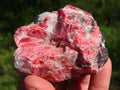
Pink aragonite is a rarer variety, recognized for its delicate shades that range from pale pink to warm, powdered tones. Its color appears due to the presence of specific mineral impurities, most often manganese, but also due to the mild geochemical conditions in which crystallization occurs. This type of crystal typically forms in sedimentary or karst environments, where the deposition processes are slow and uniform, allowing the development of fine, harmonious structures.
From the perspective of formation, pink aragonite does not appear in aggressive geological contexts, but in relatively stable environments with small variations in temperature and pressure. This “calmness” of the crystallization process is also reflected in its structure, which is often massive or slightly radial, without harsh contrasts or pronounced edges. Its shape and color convey a sense of coherence and continuity.
In crystal therapy, pink aragonite is associated with emotional balancing, the gentle reopening of trust, and reconnecting with inner strength after periods of vulnerability. Unlike other varieties of aragonite, which work more with structure and grounding, this crystal is perceived as support for emotional healing processes and delicate inner reconstruction.
It is often chosen by people who have gone through periods of emotional overload, loss, or emotional exhaustion and who feel the need to regain stability without forcing themselves. It does not rush the process, does not overly stimulate, but supports a slow rebalancing, in which trust and personal power are gradually rebuilt.
Through its mode of formation and its subtle energy, it reflects the idea that stability is not always rigid, and inner strength can also be gentle. It is a variety that perfectly complements the family of this crystal, bringing a more emotional and nuanced dimension to this mineral of structure and balance.
Blue aragonite is a rarer variety, and its color is the result of the presence of trace elements, such as copper, or specific geochemical conditions of marine and sedimentary environments. It often forms in areas where mineral-rich water interacts with volcanic rocks or metalliferous sediments.
Its structure is usually finely crystallized or massive, and the bluish hues are associated with slow deposition processes. This calm formation, in fluid environments, explains the symbolic connection to calming thoughts, conscious communication, and the balance between mind and emotion.
Green Aragonite
Green aragonite forms through the inclusion of elements such as nickel or iron, in small quantities, which influence the final color of the mineral. It is found especially in sedimentary areas or near environments rich in organic matter, where mineral solutions undergo slow transformation processes.
This progressive formation, in successive layers, reflects the idea of regeneration and adaptation. It is thus associated with emotional rebalancing and a gradual return to a healthy inner rhythm, especially after periods of change or instability.
Brown or reddish aragonite owes its color to the presence of iron oxides and typically forms in terrestrial environments rich in sediments and mineral soils. Crystallization often occurs in massive or botryoidal forms, through successive accumulations of material, without the development of well-individualized crystals.
This dense and compact formation explains its association with grounding, stability, and assuming responsibility. It is a symbol of resilience built over time and of inner strength that renews through perseverance, not impulse.
A special type is represented by star aragonite, recognized by its radial structures or in the form of 'mineral flowers'. These formations occur when crystallization happens rapidly from a central point, in environments with sudden variations in the chemical composition or water temperature.
This simultaneous growth in multiple directions is symbolically interpreted as a capacity to harmonize multiple inner planes. It is often associated with balancing energy bodies and integrating different aspects of life into a coherent whole.
This variety of aragonite is characterized by warm shades of yellow, gold, and amber, its color being the result of the natural presence of trace elements and specific formation conditions in calcium-rich sedimentary environments. It often forms in areas where mineral-laden water interacts with limestone layers or old sedimentary deposits, in a slow and constant rhythm.
Its structure is generally massive or finely crystallized, with smooth surfaces and natural textures suggesting stability and continuity.
This gradual formation, in calm environments, explains the symbolic association of honey aragonite with grounding, patience, and inner balance. It is considered a mineral that supports calm clarity, emotional maturation, and step-by-step inner reconstruction.
On druzy.eu you can find authentic aragonite specimens available for purchase, with fast delivery within 24 hours.
3. Aragonite and its integration into crystal therapy techniques
In crystal therapy, aragonite is associated with balancing energetic bodies, supporting confidence and renewing inner strength, especially during times when the external pace becomes overwhelming. Through its orderly structure and manner of formation, this mineral is viewed as a support for stability and clarity, not as a tool for sudden changes. Aragonite is not a stone of quick impulse, but of conscious, assumed, and built processes over time.
It is often chosen by people who feel the need for structure and inner order, whether they are in a period of transition, emotional overload, or personal reconstruction. In energetic work, aragonite is integrated into practices that aim to anchor in the present, calm accumulated tensions, and restore a balance between mind, emotion, and body.
One of the most common ways to use aragonite is to place it in the workspace or meditation space. Due to its fragility, aragonite is more suitable for use as an ambient stone, where its constant presence can support a stable framework for introspection and concentration. In meditation, it is often used as a focal point, helping to maintain attention and structure intention.
In crystal therapy techniques oriented towards balancing energetic bodies, aragonite is used as a stabilizing element. It is not used to "activate" or "force" certain processes, but to create a coherent energetic support, in which the person can consciously work with their own resources. For this reason, it is frequently integrated into grounding sessions, breathing exercises, or centering practices.
An essential aspect in working with aragonite is understanding its real role. Aragonite does not act independently and does not produce changes in the absence of personal involvement. It functions as a subtle catalyst, amplifying the intention, clarity, and awareness of the one who works with it. The power always remains in the person, and the mineral becomes a silent ally, supporting the process without substituting it.
Through this approach, aragonite is integrated into crystal therapy as an instrument of responsibility and inner maturity. It does not promise immediate results, but encourages patience, discipline, and the assumption of one's own path, reflecting exactly the way it was formed in nature: slowly, orderly, and in harmony with the environment.
Photo credit: Druzy
4. Conclusion
Aragonite is a mineral of structure, patience, and inner balance. It does not promise quick transformations but supports deep, slow, and conscious processes. Through its way of formation and natural geometry, aragonite reminds us that true power is built over time, layer by layer.
At druzy.eu we carefully select crystals and semi-precious stones from around the world, in natural shapes and variations, gathered into collections of crystals, jewelry, decorative objects, collector's minerals and aromatherapy – a place where you will discover the transformative power of crystals - let yourself be inspired by the diverse selection, adapted for every occasion and purpose.
Recommendations
FAQ - Frequently Asked Questions about Aragonite
1. What is aragonite and how is it formed?
Aragonite is a mineral from the carbonate class, composed of calcium carbonate (CaCO₃). It forms in caves, karst environments, thermal springs, and marine sediments, but also in biological structures such as corals and shells. Its crystalline structure is directly influenced by the conditions of temperature, pressure, and chemical composition of the environment.
2. What are the main properties of aragonite?
Aragonite is associated with balancing energy bodies, supporting confidence, and renewing inner strength. In crystal therapy, it is considered a support for stability, clarity, and inner structure, especially during periods of stress or transition.
3. What is the difference between aragonite and calcite?
Although they have the same chemical composition, aragonite and calcite differ in crystalline structure. Aragonite crystallizes in an orthorhombic system and is more fragile, but forms more elaborate structures. Calcite corresponds to a trigonal system and has greater stability over time.
4. What types of aragonite exist?
The most well-known types of aragonite are white or beige aragonite, blue, green, pink, brown, or reddish aragonite, and starry aragonite. The differences between them are given by mineral impurities and the environment in which they formed.
5. What is the significance of pink aragonite?
Pink aragonite is associated with emotional balance, regaining confidence, and gentle internal reconstruction. It forms in stable environments with slow crystallization processes, which symbolically links it to emotional healing and stability without rigidity.
6. How is aragonite used in crystal therapy?
Aragonite is primarily used as an ambient stone, placed in meditation or work spaces. It is integrated into grounding, centering, and energetic balancing practices, where it serves as a subtle support for conscious processes.
7. Can aragonite be worn as jewelry?
Due to its fragility, aragonite is less suitable for daily worn jewelry. It is preferred in raw form, as a cluster or decorative object, where it can be admired and used without the risk of damage.
8. Where is it best to place aragonite in the house?
Aragonite is ideal for offices, workspaces, meditation corners, or areas dedicated to reflection. Its discreet presence supports order, concentration, and emotional stability.
9. Does aragonite act on its own or does it require personal intention?
Aragonite does not act independently. In crystal therapy, it is considered a catalyst that amplifies intention and personal awareness. The power remains within the person, and the mineral offers only subtle support in the process.
10. Where can I easily find authentic aragonite?
Authentic aragonite can be easily found at Druzy, where aragonite is carefully selected in natural forms and diverse varieties, so you can choose pieces suitable for both collection and decorative use or in crystal therapy practices. The pieces are presented transparently, with an emphasis on naturalness and quality, to support an informed and safe choice.
If you wish to purchase these wonders of nature, we invite you to visit our online store.
✍️ About the author: Article written by the editorial team druzy.eu – enthusiasts of crystals, minerals, and their ancient stories. All information is carefully researched to offer you an authentic and profound experience.