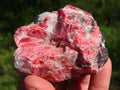
Chrysocolla – the stone of feminine energy, healing water, and spoken truth
Written by: Echipa Druzy
|
|
Time to read 14 min
What is chrysocolla and what does it help with?
Chrysocolla is a natural stone associated with sacred feminine energy and the Water element, known for its ability to cleanse and open the throat chakra. It helps express personal truth, release blocked words, and restore sincere communication aligned with the soul.
There are stones that shine through brilliance, and stones that shine through tranquility. Chrysocolla, with its deep sea and aquatic forest hues, belongs to the second category. It is a natural stone of sacred feminine energy, born to calm, release, and reconcile the being with its own emotions.
In ancient traditions, chrysocolla was regarded as the stone of gentle truth, a crystal bearer of the Water element, which dissolves tension and creates space for the authentic voice. It is a mineral dedicated to those who feel that within there are unspoken words, emotions left halfway, deep truths waiting to be expressed without fear.
Chrysocolla settles like a balm over the throat, heart, and sacred area, gradually opening the channels of expression, sensitivity, and healing.
This article explores in depth the chrysocolla stone, its origins and formation, natural varieties, spiritual significance, and energetic properties. The focus is on the connection with sacred feminine energy, the Water element, and its essential role in opening the throat chakra, supporting the expression of inner truth. The reader will discover how chrysocolla forms, where it is found, what forms exist, and how it acts on the energetic body, in a poetic and informative text perfectly calibrated for users interested in crystals.
1. Chrysocolla – properties and significance
The properties of chrysocolla reveal themselves as a flow of healing water that slowly penetrates the most tense areas of the being. It is a stone that works simultaneously with the heart, throat, and sacred center, uniting emotion, expression, and creativity into a single stream of clarity. In contact with chrysocolla, emotions lose their sharp edges and begin to flow, thawing old blockages, releasing pressures the body has silently carried. Its cool energy opens the space for deep truths, those we could not speak, not because we did not know them, but because we did not have a voice sufficiently anchored in ourselves.
Chrysocolla purifies the throat chakra through a slow and constant process, restoring the alignment between thought, emotion, and word. It does not encourage confrontation, but calm sincerity; it does not provoke outbursts, but revelations. Under its influence, truth gains courage, and silence loses its weight. It also activates sacred feminine energy, inviting sensitivity to become strength, vulnerability to become wisdom, and creativity to return to the center of life. It is a catalyst for emotional healing, a support for reconnecting with intuition, and a stone that reminds you that authenticity is the highest act of inner power.
In its essence, chrysocolla is a space of profound reorganization. It does not hasten healing, but makes it inevitable. The peace it brings is not an empty peace, but one that clarifies, restructures, and reassembles the scattered parts of the self. Everything in this stone speaks of return — to your truth, to your rhythm, to your voice.
Photo credit: Unsplash by Ariyan DV
The significance of chrysocolla is linked to the energy of water and the gentle power of sacred femininity. It is the stone that brings peace where emotions have become noisy, clarity where words have been stuck in the throat, and harmony where the body carries old tensions. In ancient traditions, chrysocolla was considered the voice of the goddess – a bridge between the heart and expression, between inner living and spoken truth. It carries within it the message that healing does not come from force, but from flow, that truth is not imposed, but revealed, and that sensitivity should not be hidden, but honored.
Chrysocolla is the stone of reconnection with the authentic self. It invites you to recognize what you feel without shame, to speak without fear, and to return to the natural rhythm of your own being. Its profound significance is that of a return home – home in the body, home in emotions, home in your inner voice. That is why it is considered one of the most powerful crystals for opening the throat chakra: it not only helps you to speak, but gives you the confidence to voice the things that truly matter.
Moreover, chrysocolla activates the creative energy of the sacred center, reminding that femininity, in its essence, is an endless source of intuition, sensitivity, and forgiveness. In its presence, conflicts calm, emotions find a natural way out, and the soul gains the space needed to tell its own truth. The significance of chrysocolla is, therefore, one of liberation: liberation from old inhibitions, from fear of expression, from emotional blockages, and from everything that has been silent for too long.
In the end, chrysocolla is the stone of harmony. An energy that doesn't press, but settles; doesn't cut, but soothes; doesn't overwhelm, but heals. Its significance is that of a profound truth: real power does not lie in rigidity, but in flexibility, not in closure, but in flow. And this flow becomes, over time, a form of inner freedom.
2. Origins and Formation – The Birth of the Mineral Chrysocolla
Chrysocolla is born in those places of the Earth where water and copper meet, where minerals transform under slow, almost mystical rhythms. It is a secondary copper mineral, formed in the oxidation zones of copper deposits, where old rocks are washed by groundwater laden with metal ions. Over time, these reactive waters seep through cracks, outlining small spaces, cavities, and veins inside the mother rock. In these spaces, copper combines with silicates and bound water, giving rise to the shades of blue, turquoise, and green that define this mineral.
The formation of chrysocolla is a slow process, taking decades or centuries, a geological work carried out in silence, in the depths. This mineral is not born in an explosion of energy, but through a gradual accumulation, through a chemical flow that reminds of the very nature of water. Therefore, its vibration is fluid, soft, almost maternal. It is the stone of underground waters that have carried the stories of the earth, dissolving metals and reconstructing them into new, harmonious forms.
The most well-known formation regions include the hot deserts of Arizona and New Mexico, the copper-rich areas of Chile and Peru, but also Africa, Israel, Mexico, and the Democratic Republic of Congo, where copper-laden soils create ideal conditions for the birth of chrysocolla. In many of these places, chrysocolla appears alongside malachite, azurite, and turquoise, forming common matrices, as if these minerals share the same geological story and the same elemental origin.
The origin of chrysocolla reflects a beautiful paradox: a mineral born from harsh chemical processes, heavy metals, and arid rocks, but which emanates, on the surface, a gentle, healing, almost aquatic energy. It is proof that the Earth knows how to transform density into light and rigidity into fluidity. Thus, chrysocolla becomes not just a result of the interaction between copper and water, but a geological metaphor of profound transformation — the same transformation it inspires in people.
Pure Chrysocolla – It is relatively rare because the mineral itself is fragile and often appears in a porous or massive form, without luster. The color ranges from sky blue to oceanic green, sometimes with slightly translucent areas. Pure Chrysocolla has a very "water" vibration, fluid and emotional, but it is not suitable for jewelry without stabilization due to its low hardness.
Chrysocolla in Matrix – The most common form in nature. Here, chrysocolla infiltrates the host rock, such as quartz, limonite, volcanic tuff, or copper-rich conglomerates. The result is a stone with strong visual contrast: veins of turquoise and blue stretch across the rock's surface, creating a pictorial, organic effect. It is a variety appreciated for its authenticity and naturalness.
Chrysocolla in Quartz (Quartz Chrysocolla) – This variety occurs when chrysocolla is included or spread within a translucent or transparent quartz mass. Quartz provides it with hardness and stability, turning it into an ideal stone for jewelry. This combination has a "wet", glossy appearance, as if the stone permanently carries the essence of water.
Chrysocolla Chalcedony – One of the most beautiful and stable forms. Chalcedony, a microcrystalline silica, envelops chrysocolla in a fine, silky texture, adding uniformity and light to the crystal. The colors are often pastel, and the stone has a calm inner glow. It is highly appreciated in luxury jewelry.
Chrysocolla–Malachite – A natural combination in which the strong blue of chrysocolla intertwines with the bright green of malachite. Typically, malachite adds density and hardness, while chrysocolla brings visual fluidity. This variety is a symbol of emotional transformation and the balance between heart (malachite) and communication (chrysocolla).
Chrysocolla–Azurite – An intense variety, with deep, royal blue, where azurite and chrysocolla interact in patterns that seem hand-painted. It is a rare and vividly colored combination that reflects the oxidation process of copper in different stages. The stone is more fragile but highly sought after by collectors.
Chrysocolla–Malachite–Azurite – The classic triad of copper minerals. Here, three energies, three colors, and three geological processes meet in a single stone. The green of malachite, the deep blue of azurite, and the gentle turquoise of chrysocolla create an amazing, almost cinematic composition. This variety is considered one of the most spectacular natural formations in the world.
Botryoidal Chrysocolla – A form with a "grape-like" appearance, where the mineral solidifies in rounded, spherical waves, resembling overlapping bubbles. This form is appreciated for its unique, organic texture and its very fluid, almost liquid energy. It is frequently found in Peru and Congo.
Chrysocolla Druzy – A rare variety, where chrysocolla is covered with tiny, sparkling crystals, creating a miniature geode effect. Chrysocolla druzy is sought after for its special brightness and for combining the delicacy of aquatic colors with the intensity of crystallization.
Chrysocolla with Tenorite – This combination brings together the delicate blue of chrysocolla and the metallic black of tenorite, resulting in a dramatic contrast. It is a fairly rare variety, with a deep, sometimes mysterious appearance that highlights the copper oxidation process in a way different from malachite or azurite.
Pseudomorphic Chrysocolla – Occurs when chrysocolla replaces another mineral, taking its shape but retaining its own chemical composition. Most often, it replaces azurite or malachite. The result is fascinating: a stone with the shape of one mineral and the soul of another. It is a variety highly appreciated by collectors.
Massive Chrysocolla – Large and compact blocks, ideal for sculptures, decorative objects, or handcrafting. Although the texture is less refined, the colors are intense and organic, making it popular in natural interior design.
Fibrous Chrysocolla – A very rare variety, with fibrillar structures, similar to thin layers or linear agglomerations. It has a unique texture and is considered a mineralogical curiosity.
4. Map of the Most Important Deposits of the Mineral Chrysocolla
Chrysocolla forms almost exclusively in regions where copper dominates the soil, and water has the ability to circulate through porous structures, dissolving and redepositing minerals in new forms. Its deposit map is essentially a map of the copper world — a spiritual and geological geography at the same time.
Arizona, USA – The World Heart of Chrysocolla
Arizona is considered the unofficial capital of chrysocolla, renowned for pieces with vibrant shades of turquoise and oceanic blue. Mines such as Ray Mine, Globe-Miami District, and Bisbee offer some of the most spectacular specimens in the world. Here, chrysocolla often appears in combination with quartz, malachite, and tenorite, and the intensity of the colors is iconic.
Peru – Botryoidal and Chalcedonic Chrysocolla
Peru is famous for the botryoidal forms of chrysocolla, often with a rounded, organic appearance, like petrified waves. Here, varieties of chalcedonic chrysocolla also appear, with pastel shades and a distinct structural stability. Famous areas include Mina Lily, Mina Acari, and the Ica district.
Congo (DRC) – The Copper Triad: Chrysocolla, Malachite, and Azurite
The Copperbelt region of the Democratic Republic of Congo is one of the richest sources of copper in the world, and chrysocolla appears here in spectacular forms, often alongside malachite and azurite. The combination of these three minerals gives rise to the most complex and precious matrices. Mines such as Shaba (Katanga) are famous for the exceptional quality of the specimens.
Chile – The Arid Lands of Atacama
The Atacama Desert, one of the driest regions on Earth, produces some of the oldest and most stable forms of chrysocolla. The extreme conditions allow the mineral to form in a varied palette of blue-green, often associated with turquoise and native copper. The regions of Chuquicamata and El Teniente are major references.
Israel – Timna Valley, “Mines of Solomon”
In the Timna Valley, one of the oldest mining regions in the world, chrysocolla appears in small quantities but with enormous cultural significance. It is said that this mineral was known since the time of King Solomon. Here, chrysocolla forms in combination with local turquoise, resulting in stones with a unique historical vibration.
Photo credit: Unsplash by Sammy Leigh Scholl
Mexico – Intensely Colored Chrysocolla from Sonora
Sonora and Cananea offer rich copper varieties, with intense shades of green and turquoise. Often, Mexican chrysocolla features alternating zones of malachite or azurite, being highly sought after in its raw state.
South Africa – Rare Deposits with Deep Coloration
Although not as abundant as those in Congo, the South African deposits produce specimens with deep hues and spectacular polymineral patterns. The mining regions in Northern Cape are the most renowned for chrysocolla.
Russia – Varieties with Dense Texture and Cool Tones
Russia occasionally offers chrysocolla with cooler, bluish tones, sometimes associated with quartz. The deposits in Ural present a distinct mineralization due to the local geological composition.
5. Chrysocolla: conclusion and spiritual significance
Chrysocolla is more than a mineral; it is a language of water, of flowing emotions, of truth born from silence. It teaches us that healing does not come from force, but from openness, that the voice becomes authentic only when it aligns with the heart, and that feminine energy is not fragility, but a gentle, circular power capable of transforming any space in which it is received.
Whether it appears in the intense forms of Arizona, the organic curves of Peru, the vibrant depths of the Congo, or the sacred regions of the Timna Valley, chrysocolla always carries the same essence: an invitation to sincerity, to flow, to return to one's own voice. It is the stone that has learned patience from the Earth and freedom from Water, and this combination makes it a rare ally for those in search of emotional balance and authentic expression.
In the presence of chrysocolla, we do not transform through effort; we transform through truth. And where truth is spoken with gentleness, healing becomes inevitable.
Recommendations
FAQ Frequently Asked Questions about Chrysocolla
1. What is Chrysocolla stone?
Chrysocolla is a semi-precious blue-green stone associated with sacred feminine energy and the Water element. It is known for its role in opening the throat chakra and releasing inner truth.
2. What is Chrysocolla used for?
Chrysocolla helps with authentic emotional expression and restoring honest communication. It is used for cleansing the throat chakra, releasing blocked words, and reconnecting with the deep truths of one's being.
3. What properties does Chrysocolla have?
Chrysocolla has properties related to calmness, fluidity, and inner openness. It clears tension in the throat area, supports feminine energy, and facilitates access to personal truths that require clarity and expression.
4. How does Chrysocolla act on the chakras?
It acts mainly on the throat chakra, cleansing and aligning it. At the same time, it subtly activates the sacral chakra, awakening feminine energy and opening a space for introspection and inner sincerity.
5. How is Chrysocolla used for opening the throat chakra?
It is worn as a pendant around the neck or held in the hand during meditation. Its presence helps release unspoken words, diminishes the fear of speaking, and expresses personal truth with gentleness and clarity.
6. What is the significance of chrysocolla?
Its significance is related to Water energy: flow, purification, revealed truth. It is the stone of reconnecting with the inner voice and deep femininity, which transforms through sensitivity and introspection.
7. How to maintain and clean chrysocolla?
Chrysocolla is energetically cleaned with sage smoke, palo santo, or by placing it on selenite. Prolonged contact with water is not recommended, as it is a more fragile mineral. Recharging is done in low light or on quartz crystals.
8. How to recognize authentic chrysocolla?
Authentic chrysocolla features shades of turquoise, blue, and green arranged organically, often in matrix with other copper minerals. The texture is often matte or waxy. Variants that are too glossy or uniform are usually stabilized or composite.
9. What colors does chrysocolla have and what do they indicate?
The colors range from oceanic blue to deep green. Blue indicates a connection with the throat chakra and the energy of truth, while green reflects the receptive, gentle feminine side that brings emotional balance and depth.
10. Where does chrysocolla come from?
The most well-known deposits are in Arizona (USA), Peru, Congo (Africa), Chile, Israel, and Mexico. Each region offers it a different shade and vibration, but all maintain the essence of water and feminine energy.
11. Is chrysocolla good for women?
Yes. Chrysocolla is one of the most powerful stones for sacred feminine energy. It helps heal the wounded aspects of femininity, return to intuition, and express truth without fear.
12. With what other stones does chrysocolla combine?
It naturally harmonizes with malachite, azurite, turquoise, and chalcedony — minerals that share the same copper origin and the same vibration of profound transformation.
✍️ About the author: Article written by the editorial team druzy.eu – enthusiasts of crystals, minerals, and their ancient stories. All information is carefully researched to provide you with an authentic and profound experience.