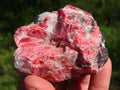
Beads are perforated elements of various shapes and sizes, used to make jewelry, accessories, and decorative objects. They can be made from natural stones, glass, ceramic, wood, metal, or synthetic materials.
In jewelry making, the choice of beads depends on the material, size, shape, hole diameter, and the type of string on which they will be mounted. Semi-precious stone beads stand out through the structure and natural variations of the minerals from which they are made.
In this guide, we explain what types of beads exist, how they are measured, which sizes are suitable for different types of jewelry, and how you can calculate the approximate number of beads needed for a bracelet or a strand.
Beads are perforated elements made from natural stones, glass, wood, ceramic, metal, or other materials. In this guide, you will find the main types and sizes of beads, how they are measured, how to choose them for bracelets, necklaces, and earrings, and how to calculate the number needed for a piece of jewelry or a strand.
1. What are beads?
Beads are small objects provided with one or more holes through which a thread, elastic, cable, or another support element can be passed. By stringing or joining them, they can be used to make bracelets, necklaces, earrings, and numerous decorative objects.
Beads have been used for thousands of years and have been made, over time, from very different materials: stone, shells, bone, wood, ceramic, glass, and metals.
Today, there are beads ranging from very small and perfectly uniform ones, intended for precision work, to large beads made from natural minerals, in which each piece may display different color, inclusions, and texture.
Beads can be made from natural or man-made materials, and the material influences their appearance, weight, uniformity, and how they are used.
Among the most common are:
natural and semi-precious stones – amethyst, agate, quartz, lapis lazuli, aquamarine, tourmaline, garnet, jade, malachite, onyx, and many others;
glass – from ordinary decorative beads to precision beads;
wood – lightweight and available in a wide variety of sizes;
ceramic – made in numerous shapes, colors, and finishes;
metal – used both for beads and for intermediate elements and spacers;
synthetic materials – such as resins and various types of plastic.
Materials should not be confused with one another. A glass bead that reproduces the color of a mineral, for example, is not a natural stone bead.
3. What are semi-precious stone beads?
Semi-precious stone beads are made by cutting, shaping, drilling, and usually polishing natural minerals so they can be set into jewelry.
They can be made from numerous stones, including amethyst, rose quartz, rock crystal, agate, carnelian, jasper, lapis lazuli, aquamarine, garnet, tourmaline, malachite, onyx, or peridot.
Unlike highly uniform industrial beads, those made from natural stone may show differences in color, transparency, pattern, inclusions, and texture.
These variations are determined by the characteristics of the mineral and the material from which they were cut.
4. What types of beads are there?
Beads can be classified by material, shape, size, finish, and the way they are intended to be used.
The size of a bead is usually expressed in millimeters and represents its diameter in the case of a round bead. For oval, rectangular, or irregular shapes, two or more dimensions may be indicated.
The size influences both the appearance of the jewelry and the number of beads needed.
Round beads are measured by their outer diameter, expressed in millimeters. An 8 mm round bead therefore measures approximately 8 mm from one edge to the other.
For other shapes, two or three measurements may be used. An oval bead, for example, may be described as 10 × 8 mm.
Apart from the outer size, the hole diameter must also be taken into account.
This is important because it determines the maximum thickness of the thread or cord that can pass through the bead.
For natural stones, dimensions may vary slightly from one bead to another.
7. How do you choose beads for jewelry?
Beads for jewelry are chosen according to the type of jewelry, material, size, shape, weight, hole diameter, and the thread they will be mounted on.
Before choosing, it is useful to determine:
1. what type of jewelry you want to make; 2. the final size of the jewelry; 3. the size of the beads; 4. the type of thread or wire; 5. whether you will use spacers, clasps, or other components.
For natural stones, weight must also be taken into account. A necklace made entirely of large stone beads will be considerably heavier than one made of 4 or 6 mm beads.
8. Which beads are suitable for bracelets?
For bracelets, both small and large beads can be used, but sizes of approximately 6–10 mm are frequently used because they offer a balance between visibility and comfort.
Beads of 4–6 mm allow for finer bracelets, while 8 mm beads provide a more pronounced look. Beads of 10–12 mm or larger become dominant visual elements.
However, the choice depends on the design and the circumference of the wrist.
For an elastic bracelet, it must also be checked whether the hole diameter allows the chosen elastic to pass through.
The approximate number of beads needed for a bracelet is calculated by dividing the bracelet length by the diameter of one bead.
For example, for an 18 cm bracelet made exclusively of 8 mm round beads:
180 mm ÷ 8 mm = approximately 22.5 beads
In practice, approximately 22–23 beads will be needed, depending on the bracelet's construction.
Bead diameter
16 cm
17 cm
18 cm
19 cm
4 mm
~40
~43
~45
~48
6 mm
~27
~28–29
~30
~32
8 mm
~20
~21–22
~22–23
~24
10 mm
~16
~17
~18
~19
12 mm
~13–14
~14–15
~15
~16
The table is for guidance only. The actual number may vary depending on the shape of the beads, the spaces between them, spacers, clasps, and the construction of the jewelry.
10. Which beads are suitable for necklaces?
Almost all bead sizes can be used for necklaces, the choice depending primarily on the length of the necklace, the weight of the stones, and the design.
Small beads allow the creation of delicate necklaces and can be combined with pendants or central elements.
Larger beads have a stronger visual presence, but the total weight of the necklace increases, especially when they are made from minerals with high density.
For earrings, small or medium beads are often preferred, as the final weight of the jewelry affects comfort.
They can be used individually, in pairs, or in combinations of several sizes.
In the case of natural stones, it is recommended to check the weight of the two pieces, because two beads of the same size may have slightly different weights.
A bead strand is a number of beads temporarily strung on a thread, sold together so they can later be used in jewelry making.
The strand should not automatically be confused with a finished necklace. In many cases, the thread on which the beads are delivered serves only to keep them together for storage, transport, and sale.
The length of the strand and the size of the beads determine approximately how many beads it contains.
For more information about their use, you can also consult the Druzy guide about semi-precious stone bead strands.
13. How many beads are in a strand?
The number of beads in a strand depends on the length of the strand and the size of each bead.
For round beads of similar sizes, the number can be estimated using the formula:
strand length in mm ÷ bead diameter in mm
For example, for a 40 cm strand:
• 4 mm beads → approximately 100 pieces; • 6 mm beads → approximately 66–67 pieces; • 8 mm beads → approximately 50 pieces; • 10 mm beads → approximately 40 pieces.
The values are approximate, because the shape of the beads and the spaces between them can change the actual number.
14. What string is used for beads?
The string is chosen depending on the type of jewelry, the weight of the beads, and the diameter of their holes.
For elastic bracelets, elastic jewelry cord is frequently used. For necklaces and other constructions, jewelry wire, textile thread, nylon, or other assembly systems may be used.
There is no single thickness suitable for all beads.
Before assembly, the diameter of the bead hole must be checked, because this limits the thickness of the string that can be used.
15. How do you recognize natural stone beads?
Natural stone beads may show variations in color, transparency, pattern, inclusions, and structure, because they are cut from natural mineral material. However, no single visual clue can prove in all cases that a stone is natural.
Perfect uniformity or a very intense color does not automatically mean that the material is artificial. Some natural stones can be very uniform, while others may be treated to alter or enhance the color.
At the same time, glass, resin, and synthetic materials can very convincingly reproduce the appearance of certain stones.
For certain identification of a material, gemological tests and examinations may be required.
16. Are natural stone beads all identical?
No. Beads made from the same natural stone may have visible differences in color, transparency, inclusions, and pattern.
These variations are the result of the composition and structure of the mineral, as well as the conditions in which it formed.
For example, two agate beads may display completely different patterns, and quartz beads may have different degrees of transparency and inclusions.
Natural variation is one of the reasons why a strand made of natural stone should not be evaluated by the uniformity standard of industrial glass or plastic beads.
17. What are Miyuki beads?
Photo credit: Druzy
Miyuki beads are Japanese glass beads, known especially for their very uniform sizes and shapes.
They are produced by the Japanese company Miyuki and are frequently used for techniques involving small beads, including bead weaving, bead embroidery, and other projects that require a high degree of regularity.
Miyuki beads are not semiprecious stone beads. The main difference is the material: Miyuki beads are made of glass, while natural stone beads are cut and drilled from mineral material.
18. Where can I find beads sold by the kilogram?
Photo credit: Unsplash
Beads can be sold individually, in sets, by strand, by weight, or by the kilogram, depending on the material, size, and supplier.
Selling by the kilogram is found especially in the case of bulk products and certain types of beads or chips.
However, for making jewelry from natural stones, selling by strand is very common, because the buyer can more easily see the size, shape, color, and approximate number of beads available.
The structure includes five groups of ten beads each, along with additional beads that separate these decades and form the introductory part of the rosary.
Other prayer beads found in different religious traditions may have a different number and arrangement of beads.
20. How do you choose semi-precious stone beads?
To choose semi-precious stone beads, check the type of stone, the size and shape of the beads, the length of the strand, the hole diameter, and any information about treatments applied to the material.
For making a piece of jewelry, the following should also be taken into account:
• the color and natural variations of the stone; • the weight; • the desired uniformity; • the type of setting; • compatibility with the stringing material; • the number of beads required.
For projects where the natural look is important, subtle differences between beads do not necessarily represent defects, but may come from variations in the mineral material.
FAQ – Frequently asked questions about beads
1. What are beads?
Beads are perforated elements made of stone, glass, wood, ceramic, metal, or other materials, used for making jewelry and decorative objects.
2. What sizes do beads come in?
Beads can range in size from a few millimeters to a few centimeters. For jewelry, common sizes include 2, 4, 6, 8, 10, and 12 mm.
3. What beads are used for bracelets?
Many sizes can be used for bracelets, but beads of approximately 6–10 mm are common. The right size depends on the design and the wrist circumference.
4. How many beads are needed for a bracelet?
The number depends on the length of the bracelet and the diameter of the beads. A bracelet of approximately 18 cm requires, as a guideline, 45 beads of 4 mm, 30 beads of 6 mm, 22–23 beads of 8 mm, or 18 beads of 10 mm.
5. What is a bead strand?
A strand is a group of beads threaded on a string, usually for storage, sale, and later use in jewelry making.
6. How many beads are in a strand?
The number depends on the length of the strand and the size of the beads. A 40 cm strand can contain approximately 100 beads of 4 mm, 67 of 6 mm, 50 of 8 mm, or 40 of 10 mm.
7. What are Miyuki beads?
Miyuki are Japanese glass beads characterized by very good uniformity of shape and size. They are not natural stone beads.
8. Do natural stone beads have the same color?
Not necessarily. Natural stones may show variations in color, transparency, inclusions, and pattern even when the beads come from the same type of mineral.
For carefully selected crystals and jewelry, you can choose from the collections available in the Druzy online store.
Articles about crystals, zodiac signs, and semi-precious stones:
If you are interested in crystals associated with astrology and their symbolism, also discover the articles below about zodiac signs, semi-precious stones, and the energy of crystals.
✍️ About the author: Article written by the editorial team druzy.eu – passionate about crystals, minerals, and their ancient stories. All information is carefully researched to offer you an authentic and profound experience.