Calcite and its types – from formation to energetic properties
Written by: Echipa Druzy
|
|
Time to read 12 min
What is calcite and what properties does it have?
Calcite is a natural mineral, known for its structural clarity and diversity of colors. Energetically, it is associated with mental clarity, internal reorganization, and energy flow, supporting processes of awareness and balance.
Calcite is one of the most widespread minerals on Earth, but also one of the most versatile in terms of structure and energy. Present in sedimentary rocks, spectacular cave formations, and well-defined crystals, calcite inherently reflects the idea of circulation, adaptation, and transformation.
Mineralogically, calcite is a calcium carbonate that forms through slow and repeated processes, where matter is deposited layer by layer, without haste. This progressive formation is also reflected in the way calcite is perceived energetically: as a mineral that supports clarity, internal reorganization, and integration of experiences, not through force, but through understanding.
Energetically, calcite is considered a gentle amplifier of awareness. It does not create changes in the absence of intention, but can support already initiated processes, helping to clear thoughts, harmonize emotions, and achieve better alignment between mind, heart, and action. Each variety of calcite expresses these qualities differently, depending on color, structure, and the environment in which it was formed.
Photo credit: Druzy
This article provides a comprehensive insight into calcite, one of the most widespread and versatile minerals in nature. It presents the mineralogical formation of calcite, its role in traditions and symbolism, general energetic properties, as well as the main types of calcite – transparent, blue, orange, Mangano pink, white, and cave calcite.
1. Calcite in Traditions and Symbolism
Throughout history, calcite has been associated with the idea of clear vision, both in a physical and symbolic sense. Its optical property of double refraction, where objects appear doubled when viewed through the crystal, has attracted attention since antiquity, being interpreted as an ability to perceive multiple levels of reality simultaneously.
In old traditions, transparent calcite was seen as a support for discernment and understanding the truth beyond appearances. It was not considered a mineral of sudden revelations, but of clarity that is built through observation and reflection.
Natural forms of calcite in caves also had a strong symbolic charge. These structures, created through slow deposits, in darkness and silence, were perceived as bridges between worlds – between surface and depth, between exterior and interior. In many cultures, caves were sacred spaces, and calcite was seen as an expression of the Earth's natural rhythm and the order that governs matter.
Thus, calcite came to be associated with the idea of cosmic order, balance, and connection between man and the deep structure of the world he lives in.
Photo credit: Druzy
2. General energetic properties of calcite
From an energetic perspective, calcite is considered a mineral that supports the processes of awareness and inner reorganization. It is not associated with forced transformations or sudden interventions, but with a gentle acceleration of processes already active within the user.
Calcite does not create something from nothing. It acts through amplification, clarification, and ordering, supporting better energy circulation and a more coherent understanding of one's own experiences.
In general, calcite is associated with:
Mental clarity and the ability to organize thoughts
Releasing emotional stagnation and accumulated tensions
Integration of experiences and life lessons
Energy fluidization in the body and supporting inner balance
The energy of calcite is stable, coherent, working through clarification and organization, not through pressure or force. For this reason, it is often chosen during periods of transition, confusion, or personal reorganization.
Photo credit: Unsplash
3. Types of calcite and their energetic frequency
Although all varieties of calcite share the same basic structure and the same general properties, the color, secondary chemical composition, and formation environment profoundly influence how the energy of this mineral is perceived and used.
Calcite appears in transparent or opaque forms, in warm or cool shades, and also in spectacular structures formed in caves, each variant reflecting different geological conditions. Transparent calcite is associated with clarity and clear perception, blue calcite with calming the emotional plane, and orange calcite with creative energy and vitality.
Mangano pink calcite is attributed a gentle frequency, linked to empathy and well-being, while white calcite is perceived as a mineral of purity and superior clarity. Cave calcite, formed slowly in darkness and silence, is associated with depth, intuition, and inner vision.
On a symbolic and energetic level, each type of calcite reflects the conditions in which it was formed: the rhythm of deposits, the stability of the environment, the presence of certain chemical elements, or specific geological processes. These differences translate into a distinct energetic frequency, which can support different aspects of inner life - from mental clarity and emotional calming to creativity, empathy, or deep introspection.
In the following chapters, each type of calcite is analyzed separately, starting from its mode of formation and continuing with the connection between these natural processes and its energetic properties, to provide a coherent and applied understanding of this complex mineral.
If you wish to explore pieces of authentic calcite, selected from different regions of the world, you can discover the entire collection of authentic Druzy calcite 👇
4. Transparent calcite – formation, clarity, and conscious manifestation
How transparent calcite forms
Transparent calcite typically forms in stable hydrothermal or sedimentary environments, where calcium carbonate-rich solutions crystallize slowly, without significant impurities. The constant rate of deposition allows for the appearance of clear, well-structured crystals with an orderly internal lattice.
This lack of inclusions and structural defects is why transparent calcite frequently exhibits the phenomenon of very clear double refraction.
The connection with energetic properties
Its clear and orderly structure is directly associated with mental and perceptual clarity. Energetically, clear calcite supports the ability to see things as they are, without emotional or mental distortions. It is associated with intuition because it helps in filtering information and recognizing the essential.
In manifestation, this type of calcite does not create intentions but helps in clarifying them, facilitating the alignment between thought, intention, and action.
Photo credit: Druzy
5. Blue Calcite – formation, emotional calm, and subtle connection
How blue calcite forms
Blue calcite forms through the inclusion of specific mineral impurities, most commonly copper or other elements that influence the color, during the crystallization process. This usually occurs in sedimentary or hydrothermal environments where the chemical composition of solutions changes slowly.
The process is gradual, without major geological shocks.
The connection with energetic properties
This slow formation, in a stable environment, explains the association of blue calcite with calming the emotional plane. Energetically, it supports the calming of intense reactions and the creation of a safe inner space.
The subtle connection and openness to finer perceptions are associated with this internal stability: when emotions settle, intuition can be perceived more clearly.
Photo credit: Druzy
6. Orange Calcite – formation, creativity, and vital energy
How orange calcite forms
Orange calcite owes its color to the presence of iron oxides or other mineral inclusions that integrate into the crystal lattice during formation. It frequently appears in sedimentary rocks or in cavities where mineralization is active and variable.
This type of calcite often forms in dynamic environments, where mineral flow is more intense.
The connection with energetic properties
This dynamic of formation is energetically reflected by associating orange calcite with vital energy, creativity, and free expression. It is a mineral that supports movement, initiative, and confidence in one's ideas.
Energetically, it is used to support breaking out of creative blocks and mental rigidity, promoting a more relaxed relationship with the process of creation and innovation.
Photo credit: Druzy
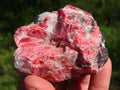
7. Pink Calcite (Mangano) - formation, empathy, and emotional health
How Pink Mangano Calcite is formed
Pink Mangano Calcite is formed by the presence of manganese in its crystalline structure. This process occurs under gentle geological conditions, usually in sedimentary or hydrothermal deposits with moderate temperatures.
Crystallization is slow and uniform, which gives the mineral its delicate texture and pastel color.
The connection with energetic properties
This gentle formation explains the association of Mangano Calcite with empathy, well-being, and emotional healing. Energetically, it supports the processes of reconnecting with oneself, harmonizing the relationship between heart and mind.
It is often chosen during periods of emotional exhaustion or inner imbalance because it does not overly stimulate but offers support and stability.
Photo Credit: Druzy
Recommendations
8. White Calcite – formation, purity, and superior clarity
How white calcite forms
White calcite forms from solutions rich in calcium carbonate, without significant chromatic inclusions. It is one of the purest forms of calcite, frequently appearing in massive sedimentary rocks or well-defined crystalline deposits.
The connection with energetic properties
This structural purity is energetically associated with clarity, order, and extended perception. White calcite is attributed with the ability to support processes of inner simplification and elimination of mental noise.
It is often used in meditation and introspection because it helps to clarify intentions and organize thoughts.
9. Cave Calcite – formation, intuition, and depth
How cave calcite forms
Cave calcite forms through extremely slow deposits of calcium carbonate, drop by drop, in conditions of constant humidity and total darkness. The process can take thousands or even hundreds of thousands of years, resulting in structures such as stalactites and stalagmites.
The connection with energetic properties
This slow and profound formation is directly linked to the energetic association with patience, intuition, and inner revelations. Cave calcite is attributed with the ability to support processes of introspection and clarity obtained over time, not through haste.
It is a suitable mineral for deep inner work, where understanding appears gradually as the inner layers are explored.
Photo credit: Druzy
10. Green Calcite – formation, heart connection, and deep relaxation
How green calcite forms
Green calcite it is formed by the inclusion of mineral impurities such as chlorite, nickel or other elements that influence the green hue during the crystallization process. It frequently appears in stable sedimentary or hydrothermal environments, where conditions allow for slow and relatively uniform crystal growth.
This type of calcite typically develops in balanced geological contexts, without extreme fluctuations in temperature or pressure, giving it a calm and coherent structure.
The connection with energetic properties
The stability of the formation environment is energetically linked to relaxation, stress reduction, and the restoration of emotional balance. Green calcite is associated with the heart chakra, supporting a more harmonious connection between emotions and thoughts.
Energetically, it is perceived as a mineral that helps release accumulated tensions and return to a state of inner calm. It does not intensely stimulate but rather soothes, often chosen during periods of emotional or mental overload.
Photo credit: Druzy
11. Chocolate Calcite – formation, protection, and connection with the Earth's chakra
How chocolate calcite forms
Chocolate Calcite , also known as brown calcite, forms through the presence of iron oxides or other elements that impart shades of brown and tan during the crystallization process. It frequently appears in sedimentary deposits or in areas where mineralization is influenced by iron-rich rocks.
The formation environment is dense and stable, often associated with deep layers of the Earth's crust.
Connection with Energetic Properties
This formation in dense and mineral-rich contexts is energetically associated with protection, stability, and grounding. Chocolate calcite is attributed with a strong connection to the Earth chakra, supporting the feeling of safety and anchoring.
Energetically, it is perceived as a mineral that helps strengthen personal boundaries and maintain balance during periods of instability. It is often chosen by those who feel the need for energetic protection and reconnection with the base, the real, and the natural rhythm of the body.
Photo credit: Druzy
12. Conclusion
Calcite is a mineral of clarity and internal reorganization, whose diversity directly reflects the complexity of the natural processes through which it forms. From transparent, clear, and orderly crystals to slow and deep structures in caves, each type of calcite expresses a different relationship between stability, rhythm, and transformation.
From an energetic perspective, calcite does not promise sudden changes and does not replace personal effort. It acts as a support for processes already underway, helping to clarify thoughts, harmonize emotions, and better integrate experiences. The connection between the formation mode of each variety and its energetic frequency provides a coherent framework of understanding, in which nature and inner experience reflect each other.
Through its varieties – transparent, blue, orange, Mangano pink, white, or cave – calcite can support different stages of the inner journey, from clarity and calmness to creativity, empathy, and deep introspection.
Choosing a type of calcite thus becomes less a matter of belief and more one of personal resonance, in tune with each person's needs and intentions.
At druzy.eu we carefully select crystals and semi-precious stones from around the world, in natural forms and variations, gathered in collections of crystals, jewelry, decorative objects, collector's minerals and aromatherapy – a place where you will discover the transformative power of crystals - let yourself be inspired by the diverse selection, adapted for every occasion and purpose.
If you wish to purchase these wonders of nature, we invite you to visit our online store.
Calcite is a natural mineral formed from calcium carbonate. It is formed by the slow deposition of calcium carbonate from aqueous solutions, in sedimentary, hydrothermal environments or in caves, through processes that can last from years to thousands of years.
2. What properties does calcite have?
Calcite properties - it is associated with mental clarity, internal reorganization, and energy fluidization. Energetically, it supports processes of awareness and integration without forcing changes.
3. What is the difference between the types of calcite?
The differences between types of calcite arise from color, secondary chemical composition, and formation environment. These variations influence both the appearance of the mineral and the energetic frequency associated with each variety.
4. What properties does orange calcite have?
Orange calcite is associated with creativity, vital energy, and free expression. It forms in dynamic environments with iron oxide inclusions, and energetically supports initiative and self-confidence.
5. What properties does blue calcite have?
Blue calcite is known for its calming effect on the emotional plane. It is associated with soothing emotions, authentic communication, and subtle connection, being suitable during periods of stress.
6. What properties does pink (Mangano) calcite have?
Pink Mangano calcite is associated with empathy, well-being, and emotional health. Its gentle formation, in the presence of manganese, is linked to its comforting and stabilizing energy.
7. What properties does white calcite have?
White calcite is associated with clarity, purity, and mental organization. It is often chosen for meditation and introspection, as it supports simplification and the elimination of inner noise.
8. What properties does yellow calcite have?
Yellow calcite is related to energy, optimism, and personal confidence. Energetically, it is considered a mineral that supports motivation and a general state of balanced vitality.
9. How do I choose the right type of calcite for me?
Choosing a type of calcite depends on personal needs and inner resonance. Each variety supports different aspects, from clarity and calm to creativity or introspection.
10. How is calcite used and maintained?
Calcite can be used in meditation, placed in personal space, or as a decorative object. It is a mineral sensitive to water and acids, so gentle cleaning methods are recommended, avoiding prolonged moisture.
11. Where can I find authentic calcite?
On druzy.eu, each piece of calcite is carefully selected and verified, so you receive natural, authentic crystals chosen with care for their quality and energy.
✍️ About the author: Article written by the editorial team druzy.eu – enthusiasts of crystals, minerals, and their ancient stories. All information is carefully researched to offer you an authentic and profound experience.